Copper and Chance: A Railroad Man's Korean War
The chronicle of Kermit LeRoy Fredrickson, a railroad lineman whose Korean War was shaped by precision, paperwork, and chance. By Ellen Forderer.


A finished family history chronicle by Chronicle Makers member Ellen Forderer, written during the 10-Day Writing Sprint using the STORI Method. Ellen's father rarely spoke of his Korean War years. From military records, family stories, and historical research, she reconstructed what he actually did and why the quiet, invisible work mattered.
Prologue
You knew your grandfather LeRoy — his precision with tools, the way he approached work with care and method. What you may not have known is how those qualities were shaped by his time in the Korean War. He rarely talked about those years, even with me. What I knew came in fragments: a hernia that changed everything, a converted chicken coop in California, classes of young soldiers heading to combat.
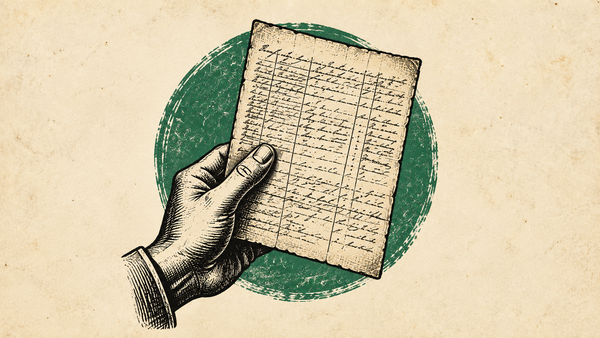
It took years of piecing together military records, family stories, and historical research to understand what he actually did during the war, and why it mattered.
A railroad man drafted into a new war
Kermit LeRoy Fredrickson was born in 1923 in Ismay, Montana. By 1949 he was a railroad lineman in Minneapolis — climbing poles in all weather, stringing wire for signals and communications, keeping the systems that ran America's trains. When his draft notice came that January, he was twenty-five, older than most, and the country was still trying to figure out what peacetime meant after World War II.
Then, on his first wedding anniversary in June 1950, North Korea crossed the 38th parallel. By October the Army was recalling men, and Kermit's name was on the list. His orders sent him toward deployment in Korea.
How chance changed everything
At Fort Lewis, a medical screening found a hernia. Surgery meant delay. While Kermit recovered, the men from his processing group went ahead — and the plane carrying the troops he would have traveled with crashed. No survivors.
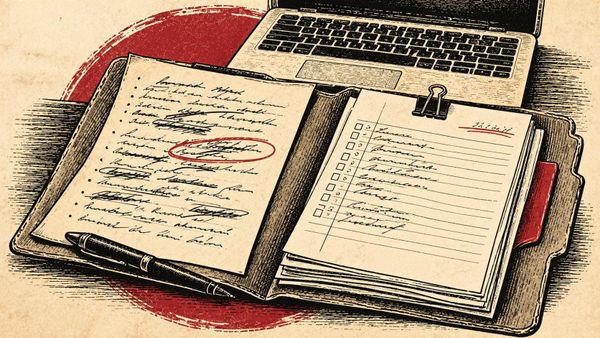
When his records resurfaced, a single line redirected his entire war: civilian occupation, railroad lineman. New orders sent him to Camp Roberts, California, as a communications instructor, teaching young Signal Corps soldiers to string wire that wouldn't fail under combat. He and his wife Mayre lived in a converted chicken coop. He taught with the precision the railroad had taught him — because shortcuts, he knew, could get someone killed.
Kermit watched them go. He was not a hero. He had not seen combat. He had survived by accident — a hernia, lost records, and bureaucratic details about railroad work. But he had spent the life that chance gave him doing the invisible work correctly.
[The full chronicle follows Kermit from his Montana birth through basic training, the pack-mule work at Camp Carson, the near-miss that saved his life, and the months at Camp Roberts teaching the invisible infrastructure of war — fully sourced to military records, the 1950 census, and U.S. Army histories.]
Read the full chronicle
Read the complete chronicle of Kermit LeRoy Fredrickson (PDF)
Written during the Chronicle Makers 10-Day Writing Sprint, with Claude and revised extensively by the author. As Ellen puts it:
"For decades, I've preserved our family history through genealogy scrapbooks, combining photographs and journaling. Writing short chronicles captures what pictures alone cannot."
That's AI-tooled family history writing — the research, the direction, and the voice are the author's; the tool helped turn fragments into a story her sons can read.
See more finished stories on the Chronicles page, learn the STORI Method, or read about how much research is enough before writing.
Want to write your family's chronicle?
Ellen had decades of scrapbooks and fragments. What she gained was a method and a deadline. That's what Chronicle Makers is built for.