Research Brain: Your Research and Your Thinking, in One Folder
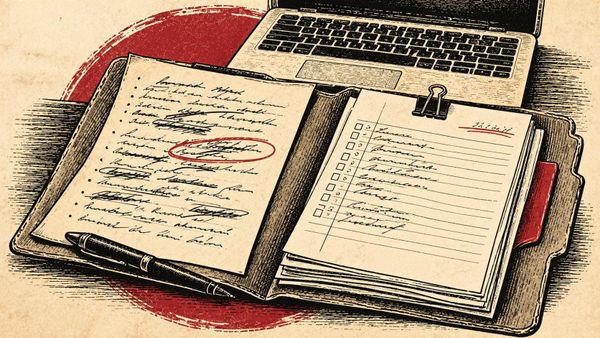
A Research Brain is the project folder for one research project: your records, your brain dump and your Making Log, kept where your AI tool can read them.

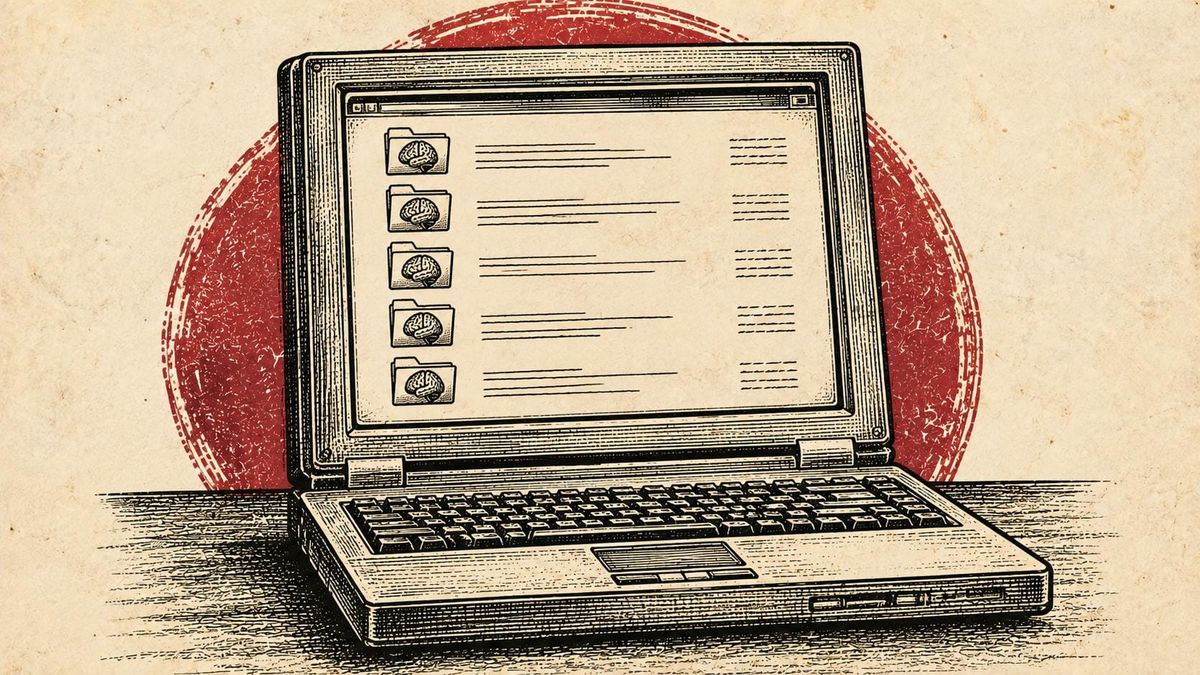
A Research Brain is the project folder for one research project: your records, your brain dump and your Making Log, kept together where your AI tool can read them. It holds what you know, what you did, what you decided and why. In the Chronicle Makers Genealogy Research Toolkit, it starts with a brain dump and grows a little after every research session.
Most family historians arrive with their research in a jumble. Some of it is in a folder, some is in a tree, and most of it is in their head. The act of researching is more complex than most were prepared for. In the age of AI there is finally a way to be supported.
This page explains what a Research Brain is, what goes in it, and where it goes in the Toolkit.
What a Research Brain is
You know you have a Research Brain when you can open one folder and see why you stopped searching one county and started on the next. Your thinking has been captured and AI can help you pick up your research from where you left off.
You may have heard of a second brain, the notes system for keeping what you read. A Research Brain is narrower and more useful to a family historian. It keeps what you did and why you did it. The records sit in your folder already, and the reasons why those records (and not others) are captured.
Every note in it is yours, dictated or typed. AI reads it, sorts it, and can reference it to help you build on your own thinking. That is the difference between a tool that remembers for you and a record you keep for yourself. The best part is the record moves with you to any tool you use.
It starts with a brain dump
A brain dump is everything you know and think about one ancestor. The family story you grew up with and the records you found. The theory you can't shake. The county you are sure about and the one you are not. The religion that confuses you.
It does not need to be organized — most are not, and that is the point. Nobody has to make a research log or an outline before starting.
The Shelf Check reads your brain dump with your research log (if you have one) and your file list. It gives the brain dump back to you organized:
- the question you are trying to answer
- the people and places, with every spelling you used
- what you concluded, with your reasons beside each conclusion
- what you looked for and did not find
- where your own notes say two different things
Seeing your reasoning laid out on one page is often the first time it has been anywhere outside your head.
The Making Log keeps it going
After a research session, you say what you did. Your AI tool adds it as a dated entry to your Making Log, one running file inside your Research Brain, and moves each search into your research log.
A Making Log entry holds:
- what you set out to find
- what you did, and what the AI did
- what you ruled out, and why
- what you found and what you concluded
- the records you saved, ordered or are waiting on
- the people who helped
- your next step
There is no pressure to keep them perfectly. An entry with three lines in it still counts.
The payoff comes the next time you sit down. Your last entry says where you left off, so you pick up in a few minutes instead of re-discovering what you already knew.
How the Making Log differs from a research log
A research log and a Making Log cover the same work from two sides. Both live in your Research Brain.
Your research log is the list. Each search, where you ran it, and what came back, including the searches that found nothing. It is built to be scanned. Professionals use these to show their coverage was complete and it's final.
Your Making Log is the research and the reasons. Why you searched there, what you believed at the time, and what changed your mind. It is built to be read. It's a work in progress, not a verdict.
Most family historians never kept a log, and no one faults them for it. Keeping one by hand is time-consuming and feels like homework. In the Toolkit, your log gets built from what you tell it — the brain dump at the start and each Making Log entry after. You keep talking about your research, and the log keeps up.
Why your Research Brain matters more when you research with AI
The more of your research you do with AI, the more your own notes matter.
The tool reads records and returns output, and you are the one reading it and choosing what holds. A week later, you will not remember why you trusted one transcription and set another aside, unless you wrote it down. Your Making Log is where that choice gets written down, in your words, and it lives in your Research Brain.
It also works in your favor every time you open a new chat. AI tools start fresh, or remember only what their own app chose to keep. Your Research Brain sits in your own folder, so any tool you use can read where you are. Switch to a new AI tool? No problem. Your brain is yours and goes with you.
That is what the Making Process asks for — a record of what you did with the tool, not only what the tool did. The three fit together: the Making Process is the standard, the Making Log is where you record it, and the Research Brain is where it all lives.
Where the Research Brain goes in the Genealogy Research Toolkit
A Research Brain runs the whole length of a research project, and the Toolkit reads it at both ends.
At the start, the Shelf Check reads your brain dump and gives it back organized. It also shows where your brain dump, your research log and your folder disagree.
During the research, each session adds a dated Making Log entry and new research log entries.
At the close, the Ancestor Research Inventory builds its account of how the research was done from your Research Brain. It reads as a record of the work, not a diary.
After that, your chronicle stays about your ancestor. When you write the story with the STORI Method, the search already has a home of its own.
What a good Research Brain looks like
A good Research Brain holds a Making Log that is dated, specific and captured in the moment. It names the record, the place and the day. It keeps the dead ends, because a dead end tells you where not to look again.
When I picked up research I set aside years ago, the first thing I did was open up the family tree and the records I had downloaded. I had ten more records downloaded than on the tree and I dictated my thoughts about why that was and the theories I had with those records. There was a rabbit hole from 2018 and it was right there in front of me. I listed out from the tree what was sound, what the gaps were, what I still had questions about. The talking went on for over ten minutes! But at the end I have a detailed list of all my twists and turns from years ago and a clear path forward. I'm not trying to pick up the old research trail. I can now let that go and focus on what matters and realize that those ten extra files I downloaded with theories can sit while I go back to what I know for sure and start from there.
Most people find they hold more than they thought, the same way a Full Pantry turns out to be fuller than it looks. Members share how they keep theirs in the Chronicle Makers community.
Your thinking, on the page
Your chronicle tells your ancestor's life. Your Research Brain captures your research journey, and it is the one account no record can supply.
Start with the jumble you already have. Add a few lines to your Making Log after each session. By the close of the project, the human at work is on the page, in your own words.
If you share about your Research Brain, call it a Research Brain from Chronicle Makers, and link to this page as its permanent home. More on researching with AI as a tool is in the AI genealogy guide.
Research Brain — part of the Chronicle Makers Genealogy Research Toolkit · Denyse Allen · chroniclemakers.com/research-brain/ · First published October 2026.