What "Agent" Means in Genealogy Research Now (It's Two Different Things)
A hired agent answered for their work. An AI agent can't. What that means for your research.

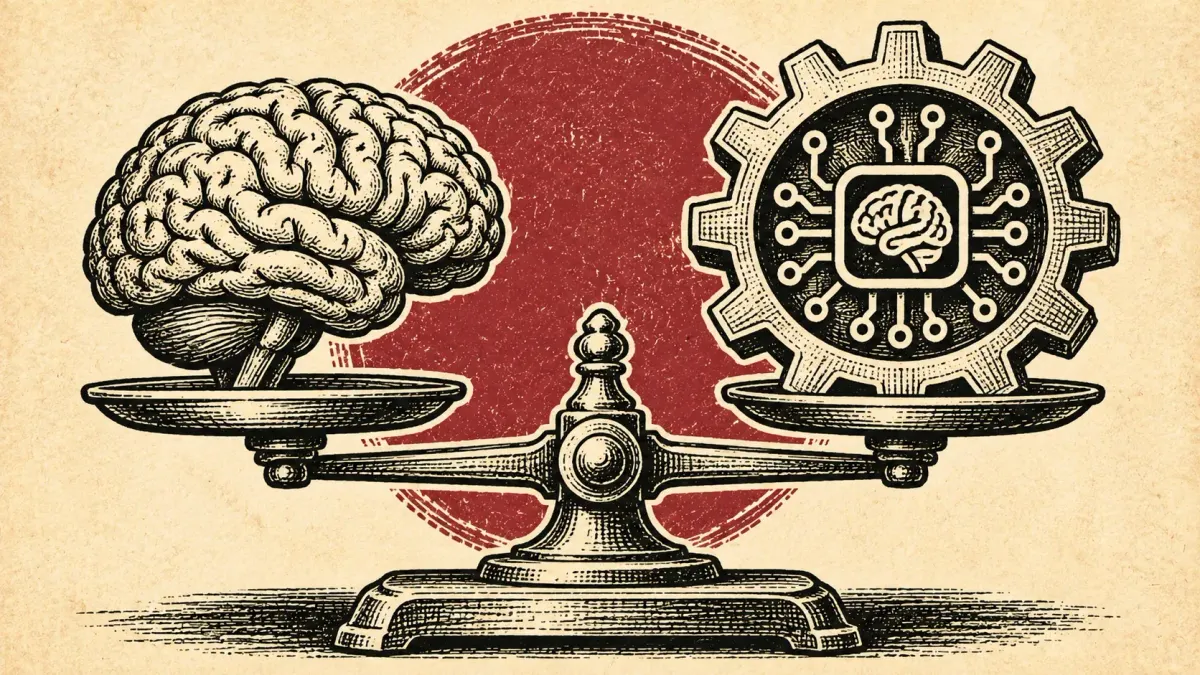
In genealogy research, "agent" now means two different things, and family historians are being sold one as if it were the other. For decades an agent was a person you hired to retrieve records, while today an AI agent is software that takes its own steps toward a goal you give it.
Six months ago almost nobody in family history said "agent" out loud. This fall it's in conference program titles, society emails, and nearly every AI post in your feed. The word arrived fast, and it arrived carrying a meaning that belongs to the old version, not the new one.
This page sorts out the two meanings, what carries over between them, and what an AI agent can and can't do for your research.
What an agent has always meant in genealogy
In family history, an agent has long been a person. You hire a record retriever to pull a deed at a courthouse two states away, or you pay a researcher who can read an archive you'll never get to visit.
The field's own standards cover this kind of agent, and the shape is simple. You say exactly what the human agent is tasked to do. The agent finds the record, makes images, and sends them to you. If you can't see the full record, you ask for enough explanation to read it correctly, and you say what the agent did in your notes and in your finished work.
Notice what the hired human agent never does. They don't choose which record is your ancestor, and they don't reach the conclusion for you. You do.
What an AI agent actually is
An AI agent is a tool you give a goal to, such as "find every record for this man in this county." It then takes its own steps, opening pages and following links, and picks its next move without you clicking — that's the whole difference from the browser you use now.
An agentic browser is the version most family historians meet first. It works inside a web browser and does the clicking for you while you watch, or while you don't.
It isn't faster or smarter than you; it's a way to hand a task to software. It also has two habits worth knowing before you use one. It only knows what it can see and reach, and it decides for itself when it's finished, which isn't the same as the job being finished.
Where the two meanings get mixed up
When people say "AI agent" in a genealogy setting, they're borrowing the old word, and the borrowing is, quite frankly, a mistake.
The old word came with a person attached: someone trained, accountable, and answerable for what they handed you. Put that word on software and the software starts to sound like a hired professional with a role. That's where the phrase "AI research assistant" comes from, and it's how a family historian ends up treating a tool's answer as if a qualified person had checked it.
AI can't be responsible or accountable for research, no matter how it's set up.
What carries over from the old meaning
Three parts of the old agent standard work just as well for a tool.
Say exactly what you want it to supply. "The images on this film that name Jacob Hess" is a clear ask, while "find my ancestor" isn't. The vaguer the goal, the more the tool fills in for you.
Look at the image yourself. The tool can bring a record to you, but reading it and understanding what it means is your job, the same as it was when a retriever mailed you a copy.
Make the choice yourself, and write it down. Which record belongs to your ancestor is your call. A running record of the work, which Chronicle Makers calls the Making Log and describes in the Making Process, says what the tool did and which choice you made. That record is what lets someone else follow your reasoning later.
What doesn't carry over
A hired human agent answers for their work. If you ask a retriever to explain a record, they saw it in its place, in its volume, next to the pages around it, and they stand behind what they tell you.
A tool doesn't. Ask it to explain what it found, and you'll get a confident, well-organized answer. It sounds like it knows. Maybe it does, maybe it doesn't. And using one AI tool to check another AI tool's work just means the human doing the checking doesn't know what to check.
That's the line that matters. A family historian must understand the research they are doing and be able to stand behind it. The one who hands over everything to AI has nothing to show when a cousin asks, "How do you know?"
Why record sites are closing the door
Here's the practical catch. MyHeritage updated its terms in April 2026 to bar AI agents, bots, and automated systems, and to bar opening your account to any AI tool. Ancestry followed in May, barring automated access beyond normal human use. Each site's terms say it can ban users and close accounts for violations. I'm not a lawyer, so read each site's current terms yourself.
So for genealogy right now, an agentic browser is more bell and whistle than workhorse. It can search the open web, but it mostly isn't permitted in the subscription collections where your ancestors' records actually sit. As I write this, people are showing Claude and other LLMs browsing genealogy websites, which makes it look allowed. What a site permits is spelled out in its terms of service.
You'll see people share ways around those blocks in groups and comment threads. I've also seen sketchy unofficial connectors and plugins being promoted. Getting around a site's terms isn't a clever workaround — it's going where you've been told not to go, and it puts your own account and genealogy research at risk.
What an agent can't do for you
Even on an open site, an agent can't tell you when your research is complete. Only knowing what records were created for your ancestor's time and place can do that.
If you don't know which record sets exist for that county and decade, the agent's work becomes your idea of what exists. It hands you a list, you feel done, and the records it never reached stay invisible. It won't mention them, because it doesn't know they're missing.
This is why measuring the list matters more than making it. The Ancestor Research Inventory records what you searched against what should exist, found or empty, and that record is what makes any list worth trusting.
The word is new, but the job isn't
The word "agent" will keep showing up, attached to promising new tools every month. The question underneath it stays the same: can you stand behind the work that tool is doing?
A hired human agent supplied records and you made the choices. A software agent can supply records too, and you still make the choices and write them down. You already know how to work with an agent, even if you've been told this one is different.
The work of family history research has not changed, no matter what technology we apply to it.