Why I Write a Day in the Life Chronicle for Thanksgiving
A day in the life chronicle takes one ancestor through one day. It captures family traditions, goes deep into place and work, and gets read at the table.

As of November 2026
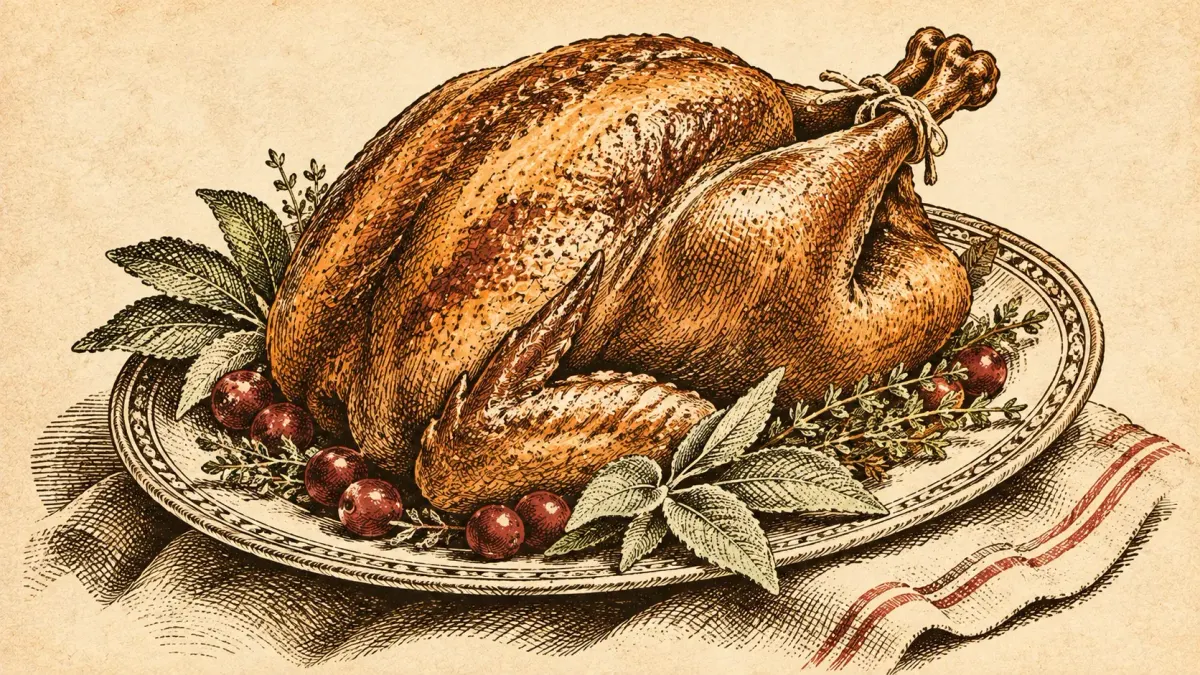
A day in the life chronicle takes one ancestor through one day, and Thanksgiving is the best day I know to try one. It captures the traditions your family still carries, it sends you deep into a place and a life, and it gives you something to read aloud at the table.
Last November I wrote a short piece that was historical fiction about my ancestor Mildred John's Thanksgiving in 1930. This November I went back and did it properly: one day, two pages, every detail traced to a source. The two versions taught me why this form matters.
The traditions your family already keeps are a source
Every family has customs nobody remembers starting. Who carves. What always goes next to the turkey. And in our family, who burned the dinner rolls. A day in the life chronicle is the place to write those down and share them.
Mildred's family was Catholic, and in 1930 every Friday was meatless. Sharon Kabel, writing for New Liturgical Movement, found no Friday-after-Thanksgiving dispensation before 1958, so in 1930 the leftover turkey waited until Saturday. That one rule changes how the whole weekend reads. Maybe they didn't follow it? But the Mildred I remember always had a matching purse, hat, and shoes...so probably not.
What I'm taking: the custom comes first, then the record that explains it. A tradition passed down out loud gets a date and gets recorded as oral history. The unfortunate fate of rolls in our house each year will be remembered forever.
The place, the work and the house
A single day forces questions a life summary never asks. What was the weather — and did she have the day off? Who else lived in the house, and who was working?
The 1930 census answered part of it. Mildred was twenty-six, a telephone operator, living on East Ninth Avenue in Conshohocken with her widowed mother and three siblings. All four grown children had been at work the day before the census taker came. Local historian Jack Coll, at ConshyStuff.com, records twenty-five operators working the town's manual switchboard on the second floor of the Reiff Building. Bell promised service on holidays, so someone sat at that board on Thanksgiving. Whether it was Mildred, I don't know, and the chronicle says so.
What I'm taking: the day is a reason to go past the first answer. Each detail climbs through the three depths of historical context until it reaches a record I can name. Now I can even draw out her likely walk to work.
Read it at the table
Last year's piece was loose with the facts and said "Mildred's breath froze in the cold air." This year I found the station record. The National Weather Service office in Mount Holly ranks Thanksgiving 1930 among the five coldest in Philadelphia's records: a high of 33 degrees and a low of 22. Did her breath freeze that day? It's a good assumption, but it's a sensory detail fiction authors use, and this is not fiction.
Plus, weather is one of those details that starts conversations around the table. Someone remembers the Thanksgiving with snow. Someone else remembers getting sunburned on a trip one year. A two-page chronicle is short enough to read between dinner and pie, and specific enough to start that conversation.
It does something for me too. Writing Mildred's day, with the switchboard, the cold and the full house, fills me with gratitude for the life she lived and for everything I have now that she didn't.
Mildred, on the other hand, would feel sorry for all my burned rolls over the years.
The day is the door
You don't need a whole life to write a chronicle. You need one ancestor, one day and the records that place them in it. The traditions, the work, the house and the weather are all sitting in research you already have.
What a chronicle actually is lays out the finished shape a short form like this grows into. From Ore to Milk follows the dairy family Mildred married into. Pick the day. Read it at the table this year.
Follow up on your own
- What a Chronicle Actually Is, Chronicle Makers
- Sharon Kabel, "On the Mythical Pius XII Thanksgiving Indult," New Liturgical Movement (guest article, November 2020)
- Jack Coll, local historian, Conshohocken telephone exchange history, ConshyStuff.com
- National Weather Service, Philadelphia/Mount Holly, Thanksgiving Climate