Claude Fable 5: What Anthropic's New Model Means for Family Historians
Anthropic released Claude Fable 5, its most powerful AI model yet. Here's an honest look at what it does, who it's for, and whether family historians need it.


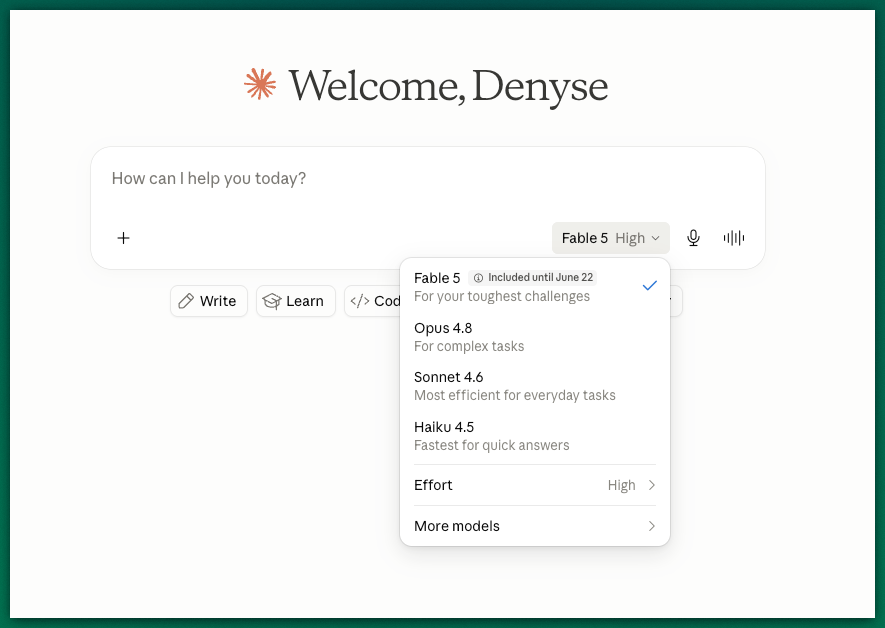
Anthropic released a new AI model this afternoon called Claude Fable 5, and it is the most powerful model the company has ever made available to the public, and the most powerful AI ever released by anyone. If you do genealogy work with AI, you now have a fourth Claude model to choose from. This post explains what this model is and when (and if) you should use it.
What Claude Fable 5 actually is
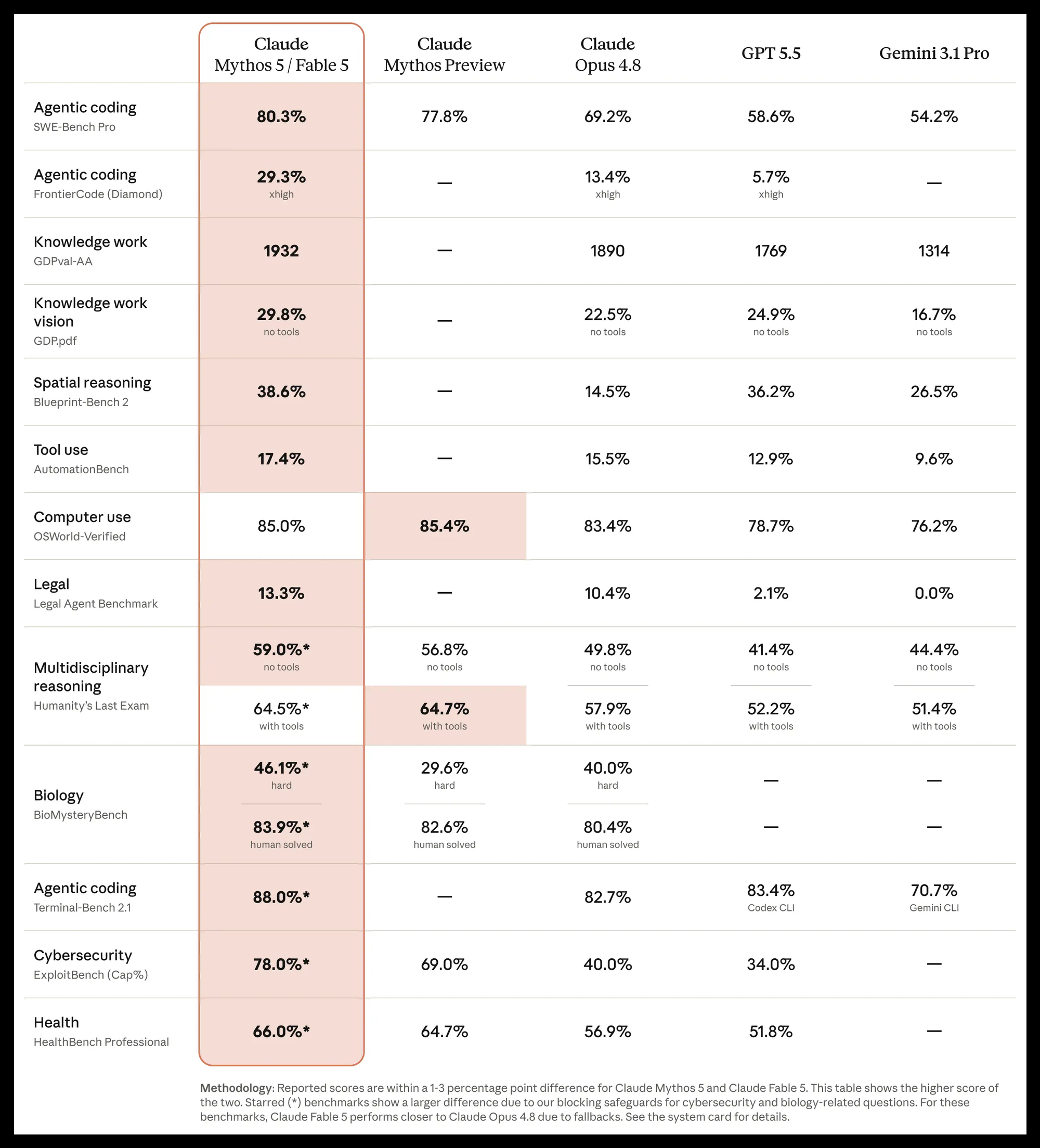
Fable 5 sits at the top of Anthropic's lineup. The Claude models you already know are Haiku, Sonnet, and Opus. Fable is a new, tier above all of them, part of the Mythos-tier models, determined to be too risky to release to the public right now. There is nothing exotic about how Fable was built. It is the same kind of model as the others, only bigger and much more capable.
Because it is so capable, Anthropic released it with strict safeguards. Certain topics, mainly cybersecurity and biology, get handled by the next model down, Claude Opus 4.8, instead. For most family history writing and research, including DNA work, this almost never matters. Anthropic's own data shows that more than 95% of sessions run on Fable with no interruption at all.
It is also expensive. Fable costs about twice as much per use as Opus 4.8, and it consumes a large amount of computing to do its work. On a paid Claude subscription that means you'll use up your allotted usage twice as fast. From today through June 22, Fable is included on paid Claude subscriptions at no extra charge. After that, using it will require additional usage credits to access.
Where Fable 5 genuinely shines
One reviewer, Dan Shipper, CEO of Every, used Fable for a week before launch described it as a warp drive, and that captures it perfectly. A warp drive is extraordinary for crossing a galaxy. It is unnecessary for getting across town.
Fable is built for large, complex tasks that it can run on its own for hours. You give it a big, meaty job, you press enter, and you walk away. It works, checks itself, corrects its own mistakes, and comes back hours later with something finished. That same reviewer gave it a single prompt asking it to read a short story and then build a playable 3D game based on it. He pressed enter and left. Three to four hours later, running entirely on its own, it had built the whole thing.
The model also has noticeably better taste and attention to detail than earlier versions. It makes thoughtful choices instead of generic ones. And it is strong at reading through large amounts of material and pulling out the insight buried inside. Anthropic and its early testers point to the same strength again and again: the longer and more complex the task, the further ahead Fable pulls.
Where it falls short for writing
Here is the part the launch-day excitement will skip. Fable did not write meaningfully better than Opus 4.8.
The team that tested it for a week found its sentences dense and blocky, built in big literary slabs. Their own conclusion: for actually writing sentences, it is probably not the model you want. It is excellent for thinking through a writing problem. It is not excellent at producing the prose itself.
That distinction is everything for a family historian. Writing a chronicle is not a single giant task you hand off and leave for four hours. It is close, back-and-forth work. You draft a paragraph about your great-grandmother, you read it, you feel that it is not quite her, and you reshape it. You ask a question, get an answer, and ask the next one. That rhythm is the work. Fable is slow, expensive, and built for the opposite of it.
To return to the warp drive: you do not use one to drive to the grocery store. You need control, feedback, and quick turns. Writing a chronicle is the grocery store, not the galaxy.
What about research?
Research is the place Fable's strengths come closest to your work. The model is genuinely strong at reading through large volumes of material and surfacing what matters inside it. Point it at a long, messy research log, a stack of related records, or decades of accumulated notes, and it can pull out patterns and connections that take a person hours to find. If you have a big, sprawling pile waiting to be made sense of, that is exactly the kind of meaty task Fable was built for.
But the same cautions hold. It is slow and it burns through your usage fast, so it really is overkill for a quick question or a single record you want to read together. And it can still state a wrong fact with total confidence, which means you measure everything it gives you against your sources, the same as with any model. Fable does not change that rule. It just gets you to the point of measuring faster, on the biggest piles.
So who is Fable 5 for?
Fable is built for people running long, automated jobs where they hand off an entire project and let AI execute it start to finish without supervision. That is real, valuable work, and a small number of people do it every day. Under the Chronicle Makers approach, you are not one of them, and that is on purpose.
The Chronicle Makers approach is AI-collaborative by design. You assess what AI gives you, work with it, and measure it against your sources. You stay in control and assess the AI as it is working. That is how a chronicle ends up sounding like you wrote it, because you did, with AI as your collaborator rather than a machine you walked away from.
Fable is the kind of model you point at a problem and leave. Most of your writing is the kind of work you stay inside of. Those are two different tools for two different jobs.
What to do this week
Try Fable a few times to see what it is like. The free window through June 22 exists precisely so you can see what a top-tier model can do without paying extra. Give it one big task and watch it work. Experiment with the effort settings too if you have not tried those already.
If you are unsure what kind of task to test it on, I have a full AI testing protocol in my AI Tools shop. The point of testing it isn't to hurry up and figure out how to add it to your routine. The point is to feel, firsthand, what this class of AI is becoming, so the headlines do not get to define it for you.
Then, for the actual writing of your family's stories, go back to your current Claude model. Opus 4.8 and 4.6, as well as Sonnet 4.6, write better than Fable for chronicle work, costs less, and move at the speed of real collaboration. You are not missing out by choosing it. You are choosing the right tool for the work in front of you.
The lesson underneath all of this is the one worth keeping: a more powerful model is not automatically a better model for what you are doing. The skill is knowing which tool fits the task. That skill is what carries you from a box of research to a finished chronicle, and no model release changes it.
Update: After working with Fable 5 for four weeks, here my full evaluation: You Don't Need Fable for Family History (Yet)
Read the full Anthropic announcement on Fable 5: https://www.anthropic.com/news/claude-fable-5-mythos-5