What's New in Google Gemini for Family Historians: January–June 2026
Summary of the newest features in Gemini AI for family historians, highlighting the most useful features and what to avoid.

Google's Gemini added a stack of features in the first half of 2026, and several of them fit family history work well. Others are noise. This is the plain-language roundup of what shipped, what it lets you do with your research, and what to leave alone for now.
For the full walkthrough of using Gemini for this work, start with Gemini for Genealogy.
Personalized help became free
In March, Gemini's Personal Intelligence feature opened to all users in the US. It lets Gemini draw on the Google apps you choose to connect, such as Gmail and Photos, so its answers reflect your own material rather than generic information. You decide which apps are connected.
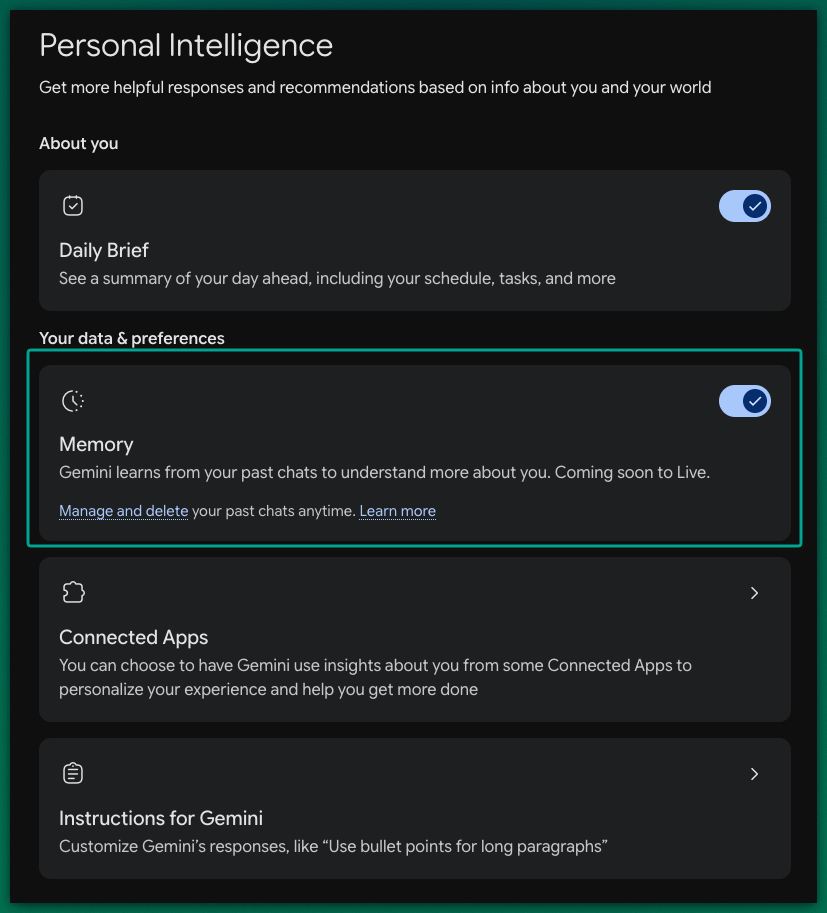
For someone whose family research lives scattered across email and photo libraries, this can pull threads together. It also means being deliberate about what you connect, which is the habit we teach in AI Privacy for Family Historians.
A real home for organizing research
The standout for family historians is the integration of the NotebookLM app into the Gemini app, upgraded through the spring and again in June. You can gather your notes, documents, and sources into an organized notebook, ask questions across all of it, and have Gemini build summaries, timelines, and outlines from your own material.
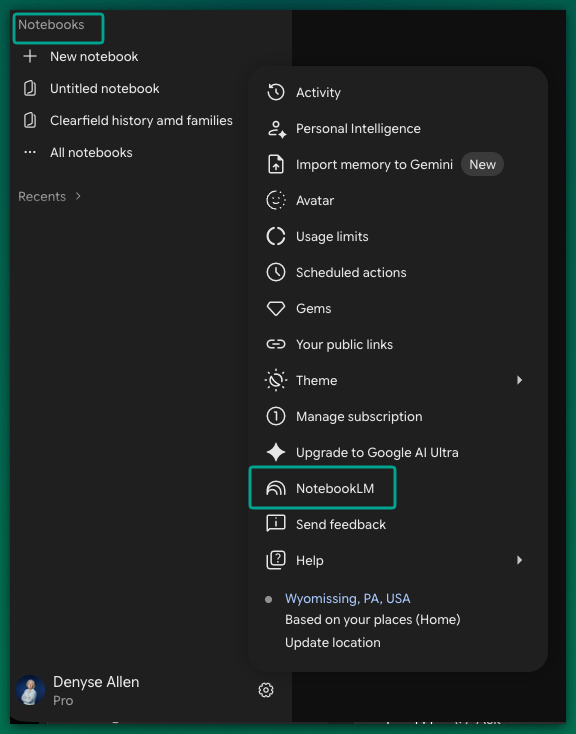
Scattered research is the reason so many family projects stall. A tool that corrals it into one place directly attacks that problem. It pairs naturally with How AI Can Help Organize Genealogy Research.
Verified citations you can check
In February, Gemini began giving direct links to the actual source behind a research claim rather than a vague summary. For anyone who cares whether a fact is real, being able to click through to the source is essential. It is the difference between a claim and a citation, and we cover why that matters in Is AI Safe to Use for Genealogy Research?.
Real-time translation for family interviews
In June, Gemini added live speech translation across seventy-plus languages that keeps the speaker's natural tone. If you are interviewing a relative who is more comfortable in another language, this turns a hard conversation into a possible one. Oral history is some of the most precious material a family historian can gather, and this lowers the barrier to collecting it.
You can bring your history in from another AI
In March, Gemini added the ability to import your chat history and saved context from another AI provider in a few clicks. If you built up a working relationship with a different assistant and want to switch, you do not start from zero.
What to skip for now
Gemini also expanded photo animation and image generation this year, including turning a still portrait into a short moving video. I realize this is a big trend, but I'd advise against it. Animating or "enhancing" an ancestor's photo creates a new, invented artifact, not a recovered one. That is a different conversation from research, and we will take it up separately. For now, keep these tools away from the documentary record.
The bottom line
In six months, Gemini gave family historians free personalized help, a genuine place to organize scattered research, citations you can verify, and live translation for interviews. Those are real gains for the work. The tool got better at helping you find and organize the truth. Telling the story is still the human part.
If you want to turn organized research into a finished chronicle, that is exactly what the 10-Day Chronicle Writing Sprint is built for.