What's New in ChatGPT for Family Historians: January–June 2026
A summary of the changes to ChatGPT from January to June of 2026, focused on what matters for family historians using it for research and writing.

ChatGPT moved fast in the first half of 2026. New versions arrived every few weeks, and the version numbers climbed quickly. Most of the constant version updates does not matter to you. A few changes genuinely help family history work. This is the plain-language roundup of what shipped, what it lets you do, and what to ignore.
For the full walkthrough of using ChatGPT for this work, start with ChatGPT for Genealogy.
The free model got more trustworthy
In May, a new everyday model became the free default for everyone. The headline improvement was accuracy. OpenAI reported roughly half as many made-up "facts" on high-stakes topics compared with the previous default.
For family history, made-up facts are the whole danger. A more accurate free model is a real step forward because the majority of genealogists are using the free version. But knowing that AI is checking itself, is not a reason to stop checking its work, and we explain why in Is AI Safe to Use for Genealogy Research?.
Better at reading scanned documents
The stronger models released in March and May improved at reading dense images and scanned pages. When you upload a photo of a record or a typed document, ChatGPT parses it more reliably than it did a year ago. In other words, it is better at transcribing documents such as wills, court records, and deeds turning that handwriting in to typed text.
A caution worth stating:these are improvements at reading photos and scans. There was no specific claim about reading old handwriting, so treat cursive from a 1790s will as something you still verify line by line. The majority of AI users are not reading historical handwriting like family historians are (no surprise to us!).
A different writing editor
In June, ChatGPT added an in-chat writing block for long-form writing and the ability to turn any answer into a saved note. The Canvas function that had been available since 2024 is now gone.
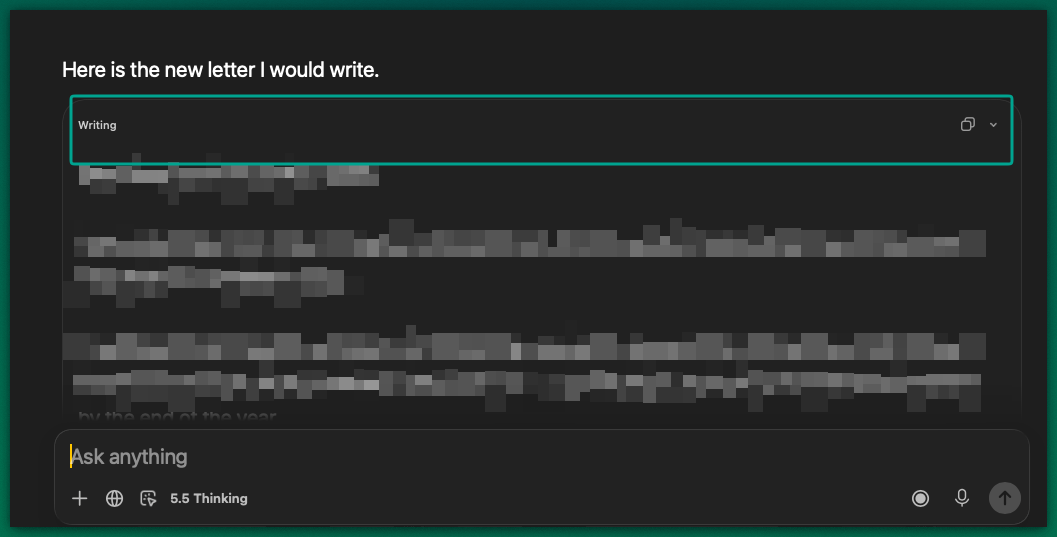
If you write your chronicles inside ChatGPT, this makes the drafting far less frustrating. You will need to copy your writing out of the chat and paste it into Word or a GoogleDoc in order to work with it further. It supports the kind of steady, iterative writing behind the Finisher Framework.
You can see what it remembers
Also new this year: memory sources. You can now see exactly which saved memory or past chat ChatGPT used to personalize an answer, and delete or correct it. Paid accounts also got larger memory.
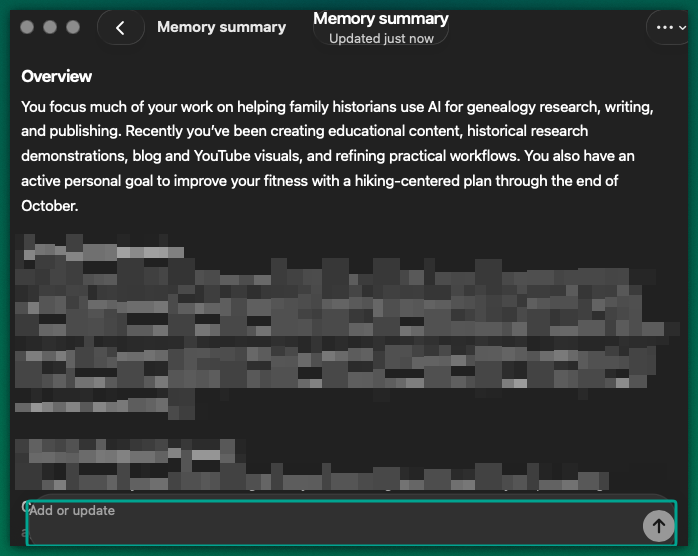
Being able to see and control what an AI stores about your family is not a small thing. It is exactly the kind of question we teach people to ask in The Five-Question Audit for Genealogy Platforms.
One myth to retire
Despite a lot of noise about "million-word" memory, the everyday ChatGPT chat window did not actually get dramatically longer this year. That huge context applies to developer tools, not the normal chat. Do not assume you can paste an entire book into the chat box and have AI read it all perfectly. Work in focused pieces.
The bottom line
In six months, ChatGPT gave free users a more accurate model, better reading of scans, a proper writing editor, and clearer control over memory. The version numbers will keep climbing. What matters is not which number you are on. It is whether you are using the tool to move a real story toward finished.
If you are ready to do that with support and a deadline, the 10-Day Chronicle Writing Sprint is where it happens.