AI Genealogy Scams: A Running List of What's Circulating
A running list of the AI genealogy scams circulating now and how to protect yourself from each one. Updated monthly by Denyse Allen.


Last updated: November 1st, 2026.
AI is being to used to scam people out of money and personal information, and I started keeping a list so family historians could protect themselves.
This page names the scam, how it works, and ends with the specific thing you can do to protect yourself. I update the page at the start of every month. If you are looking for general information on AI use, the AI for genealogy guide is the better place to start.
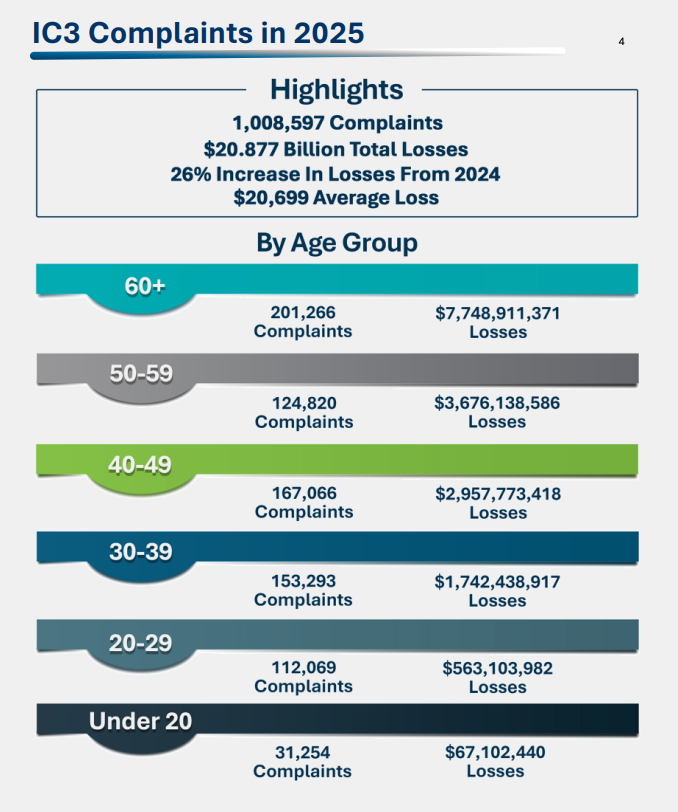
The scam numbers are not small. The FBI counted $893 million lost to AI-related scams in 2025, and Americans over 60 reported losing $7.7 billion that year, about a 60% jump. The first time I wrote about how AI could be used to scam genealogists was a piece on AI safety for family historians in February 2026.
The newest scams are listed at the top, but all of them could circulate again at any time.
Prompt bait: the free prompt that collects your family data
You have seen these on social media. Comment TREE and follow, and the prompts get sent to you. Or a prompt that promises to build your family tree if you hand over full names, dates of birth, birthplaces, and living relatives.
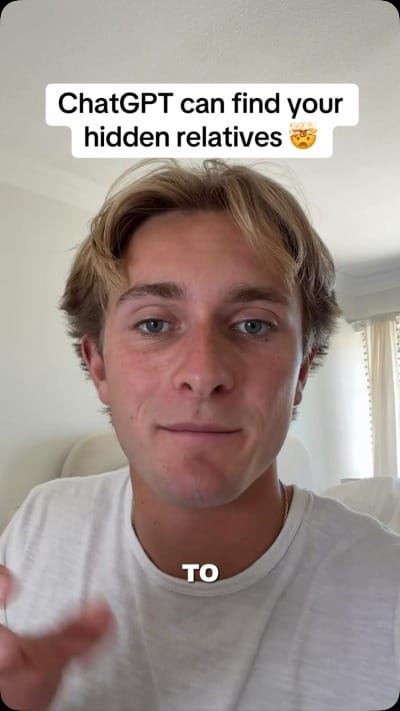
The prompt is not the product. The data is the product, and you are typing it in yourself. Family historians in the comments have worked this out faster than the accounts posting them expected, and the pushback is stronger there than anything I could write.
There is a related problem. In September 2026 a mother in Utah posted a video of her young daughter singing with her in the car. Meta AI suggested a question underneath the video: "Who is the child passenger?" Tapping it brought up each of her children's names and birth dates, based on a newborn photo her own mother had posted on Facebook years earlier, and a photo she believed she had deleted. The next suggestion offered to work out where she lives. Meta said the feature "missed the mark" and that it had fixed the problem.
Protect yourself: Never type a living relative's full name, date of birth or location into a prompt you did not write. Resist sharing children and grandchildren's photos on social media. If you want to know what a trending prompt does, run it with invented details first. I go through the upload side of this in what to think about before you paste and in what AI actually remembers about you.
Obituary mining: reading the death notice to find the family
An obituary is a briefing document for scammers. It names the surviving spouse, the children, the town, the employer, and the date the family will be at the funeral rather than at home.
In 2026 a widow lost more than $7,000 to callers who told her that her late husband had concealed tax evasion, and that she had to pay to protect what he left her. They had found her through his obituary. A spokesperson for the call-screening company Truecaller says scammers "are using artificial intelligence to scour obituaries for potential victims."
The same pattern appears as fake creditors of the deceased and as callers posing as officials handling an estate.
Protect yourself: Decide what goes in an obituary before it is published. A full date of birth, a mother's maiden name and a home address are answers to security questions, and best avoided.
The voice-clone emergency call: the grandparent scam with a real voice
Three seconds of audio is enough to clone a voice. That is a voicemail greeting, a video you posted, a webinar recording.
The call follows a shape. A grandchild is in trouble, they are embarrassed, they need money now, and please do not tell their parents. The voice is right, which is what removes the person's ability to think it through. The FBI tied $893 million in losses to AI-related scams in 2025, and $352 million of that came from people over 60.
AI-generated voices are improving by the month. On October 23, 2026, Jack Dorsey's company Block released Dessa, a voice model it says makes talking with it feel "like talking with a person." It laughs, pauses, and talks while you talk, and reporters called it eerily human. Block says it runs on a laptop.
Protect yourself: Agree a safe word with your family, in person, and ask for it the moment a call turns urgent. If the caller cannot produce it, hang up and ring the person back on the number you already have. Then swap any personal voicemail greeting for the carrier default, because a greeting in your own voice is a clean public sample. Report the incident immediately to the FBI's Internet Crime Complaint Center (IC3). (Worth noting the IC3 itself is also getting impersonated on phone calls.)
Fake obituary sites: pages built to rank for a name after a death
This one is older than the rest and still running. In March 2024, researchers at Secureworks documented a network of fake obituary websites generating AI obituaries for people who had just died, then manipulating search rankings to appear for that person's name.
Someone searching for a death notice lands on the fake instead. From there the site redirects to adult content, fake antivirus warnings, or downloads. The researchers noted that the same infrastructure could carry something worse than scareware.
It works because the searches are real and urgent, and because nobody scrutinizes a webpage while grieving.
Protect yourself: Reach a death notice through the funeral home or the newspaper rather than through a search result. Typing the name into a search box is the step the whole scheme depends on.
All story, no paper trail: the research service you cannot verify
Some of the most convincing genealogy services on social media have the least information to show. A strong personal brand, a moving account of why the work matters, testimonials, prices, and a button to pay. These services provide research, tree verification, and photo restoration for a fee.
It looks good, but is it worth the money? A legitimate business owner shows up with:
- A face and a name that lead somewhere. Search the name, and it should lead back to their work on other reputable sites.
- Credentials you can look up. Ask which one and from whom, then check the directory of the holder of the credential.
- Terms before the payment button. What you receive, by when, and what happens if it doesn't. Are refunds available?
- Clients you could actually find, rather than first names and initials in testimonials.
- No pressure to decide today.
Protect yourself: Hold a researcher to the evidence standard you hold your ancestors to. You should be able to verify them through multiple records, not just one website or social media account.
Credential exposure: reused passwords and logins handed to agents
The terms of several genealogy websites prohibit letting third parties use your credentials, and bar bots, scrapers and data-miners from bulk collection. An AI agent holding your username and password is operating well outside what your account permits, and it can act far past what you intended.
History makes the cost concrete. In 2023, attackers used passwords leaked from unrelated sites to get into roughly 14,000 accounts at 23andMe. From there they reached DNA Relatives data on about 5.5 million people, including family tree information on 1.4 million of them. The company disclosed the breach in October 2023.
It took one reused password to expose an entire network.
Protect yourself: Use a unique password on every genealogy and DNA account, and never hand a login to an agent. A GEDCOM containing living people does not belong on a site you have not vetted.
Fabricated pedigrees: the oldest scam in American genealogy
Nothing about this category is new. Fabricated lineage is close to where American genealogy started.
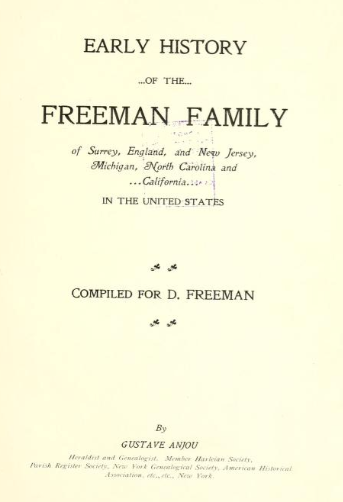
Gustave Anjou, born Gustaf Ludvig Jungberg, sold hundreds of fraudulent pedigrees to East Coast families in the late 1800s and early 1900s. He was respectable enough to serve as Secretary of the American Genealogical Society in 1912, and he was not working alone. FamilySearch documents twenty-seven known fraudulent genealogists running from the 1600s into the 1980s, and Horatio Gates Somerby's invented English ancestries are still being unpicked from family lines today.
Elizabeth Shown Mills and Gary B. Mills put it this way in 1999, and it still holds:
"Armchair historians, family-tree climbers, and professionals are all among the guilty. Many are well-meaning folk who 'just got carried away' by imagination, enthusiasm, or inexperience. Others are, yes, quite calculating in their deceit."
Gary B. Mills and Elizabeth Shown Mills, "Hoodwinks, Tomfoolery, and Fakelore," National Genealogical Society Quarterly 87 (1999): 259.
What makes Anjou worth knowing is how he built them. Robert Charles Anderson, in "We Wuz Robbed: The Modus Operandi of Gustave Anjou" (Genealogical Journal, 1991), describes a typical Anjou pedigree as carrying an overwhelming number of citations to documents that genuinely exist, and then, here and there, an invented document with no citation at all.
The Anjou pattern: how fabricated records still get through
Read Anderson's description again and you have an exact account of how a language tool confabulates. Mostly real citations. One invented, unflagged, sitting among them. I call it the Anjou pattern — the same trick in both centuries, and it has earned a name.
AI lowered the cost of running it. It did not invent it.
This year a family historian demonstrated how quickly AI makes obituaries that look like genuine newspaper clippings: she generated a 1910 obituary with ChatGPT the day before she posted it. Those images survive being separated from any caption saying they were generated. In a family folder, one looks exactly like a record.
Here is the part of the history worth your attention. Anjou's work is still in reputable libraries and still circulating online, a century after he made it. Fabricated records do not get caught. They get inherited.
Protect your family history: Trace every claim back to the record it came from, and give the already-footnoted ones the same treatment as the bare ones. That is what the Research Quality Check is built around, and the AIM framework is how I stay in charge of what a tool hands back.
Questions I get about AI genealogy scams
Is it safe to upload my family research to AI tools?
Records about people who have died are historical documents, and working with them is ordinary research. Information about living people — addresses, phone numbers, medical details, dates of birth — is a different thing. I go through it properly in AI privacy for family historians.
How do I know whether an AI genealogy app or research service is legitimate?
Search the name and see whether it leads back to real work. Ask which credential and from whom, then check the roster. Look for terms before the payment button and testimonials you could trace to a person. A legitimate business owner shows up with all of that.
Can AI tell me whether a record is fake?
No, and treating it as a detector creates a second problem. The tool has no access to the original, so it can only judge whether something looks plausible, which is exactly what a good fake is built to do. Trace the record instead.
A relative shared a prompt that builds a family tree. Is it harmful?
The risk is not the tree it builds. It is the data about living relatives the prompt asks you to type in, and where it goes afterwards.
Why I keep this list
The work of family history has not changed. Verification was the job before any of this existed, and the man selling a fabricated pedigree in 1910 was serving the same appetite the fake app serves now. Someone wants an answer, and an answer is easier to manufacture than to find.
What changes is the volume and the packaging, and that is worth tracking in one place rather than in a dozen scattered warnings.
The list stays here, it stays dated, and it grows at the start of every month. If something belongs on it, tell me.
Sharing this list? Link to the full page at chroniclemakers.com/ai-genealogy-scams and credit Denyse Allen, Chronicle Makers. Please share the link rather than copying entries into another post or handout. The list changes every month, so a copy is out of date the day it’s made.