The Three Depths of Context: Where Historical Context for Family History Comes From
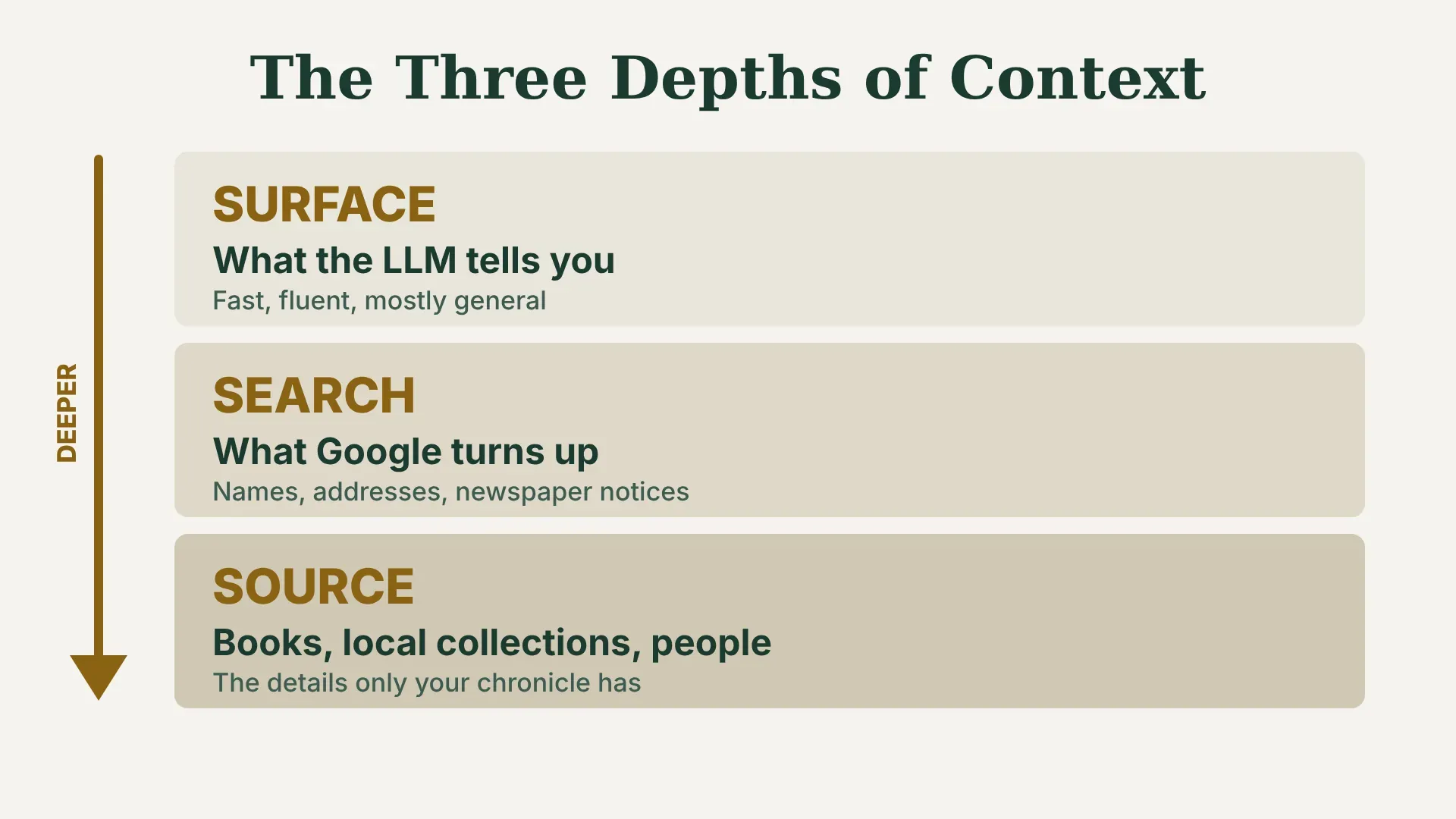
The Three Depths of Context (Surface, Search, Source) shows family historians where historical context comes from and which details belong in a chronicle.

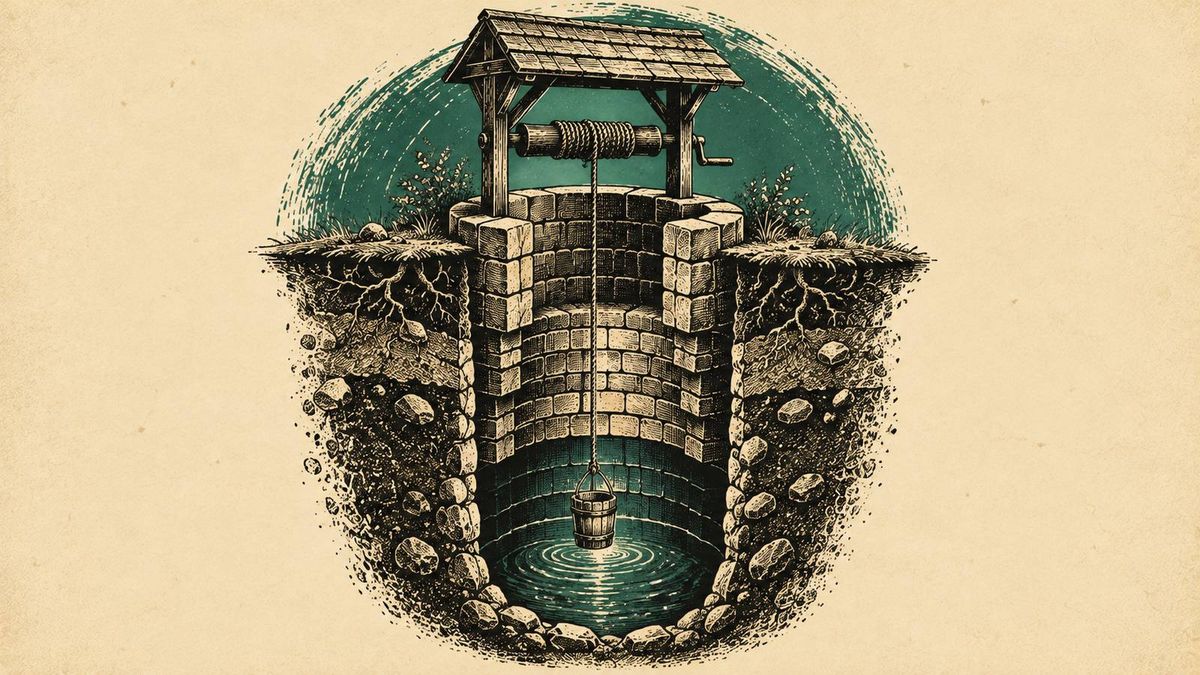
The Three Depths of Context is the Chronicle Makers name for the three places family historians find historical context: Surface, Search and Source. Each depth goes further than the one before it.
A chronicle places one person in their own town, in their own years. Where that context comes from decides whether the story is about your ancestor or about everyone who lived then.
This page covers what each depth gives you, how to tell which depth a detail came from, and where the three depths fit when you write.
What the Three Depths of Context are
Most family historians recognize the pattern the moment it is named. You ask about your ancestor's town and get an answer about the whole country. You search and find one good newspaper notice. Then the trail goes quiet, and the chronicle gets written from whatever surfaced first.
The Three Depths of Context names how far down a piece of historical context came from. Surface is what an LLM tells you. Search is what a web search turns up. Source is what lives in books, local collections and the memories of people who know a place.
None of the three is wrong. Each one does a different job, and a sound chronicle usually draws on all three. The difference that shows on the page is which depth the details came from.
Surface: what an LLM tells you about your ancestor's place and time
Ask Claude, ChatGPT or Gemini about a job, a place and a stretch of years, and you get a smart-sounding answer. A one-line question does it: "What was work in a cigar factory like for a young woman in southeastern Pennsylvania around 1900?" What comes back is a general knowledge, and a quick sense of what to look for and what to ask next.
Surface context is where you start, not what goes on the page. An LLM draws on what was written about many places, so its answer about one town usually describes every town. All LLMs are known to insert information that makes sense but isn't correct.
You run the checking, and the tool never owns your conclusions. "From a conversation with an LLM" is not a source a reader can follow.
Search: what a web search turns up
A web search finds the specific things an LLM can't: the name of the factory, an old newspaper notice, a local history post, a map. Search is where the general turns into a name and an address.
In a chronicle I wrote about a dairy family, Google Street View turned up a street sign carrying the family's name. It stands on land the dairy once worked. No LLM would have known to look for it.
Search is also uneven. What's online is what someone happened to put online. A town where one volunteer scanned fifty years of the local paper looks far better documented than the town next door — and that says more about the volunteer than about the past.
Source: books, local collections and the people who know a place
The deepest context lives in county and town histories, in local history collections, in archives that were never digitized, and in the people who remember. This is where you find what work in that building was actually like, in those years.
Dawn King Carson's chronicle of a Portage, Pennsylvania coal miner, The Weight of Coal Country, rests partly on an interview with her mother. No search engine holds that conversation, and no other chronicle has it.
Source context takes the most effort, and it's the only kind no one else's chronicle already has. It is also the depth that takes you away from the screen — usually to a library shelf or a phone call with someone who was there.
How to tell which depth a detail came from
Each depth leaves a mark on the sentence it produces, and you can read that mark after the fact.
A Surface detail would be true of any town in the same decade. A Search detail carries a proper noun: a factory name, a street, a date in a newspaper. A Source detail carries a person or a page, such as a county history, a ledger or an afternoon someone still remembers.
If you can swap your ancestor's town for another and the sentence still holds, it came from the Surface. That is not a reason to cut it. Some Surface context earns its place, the way a sentence about the price of bread sets a scene. It is a reason to know what you are holding, so the details carrying the story come from further down.
Why so much family history writing stops at the Surface
The most common way context goes wrong is researching the era instead of the events. You don't need the whole history of the 1890s. You need what touched the moments on your ancestor's timeline.
Surface context makes that mistake easy. It arrives fast and reads well, so it feels finished. No one faults a family historian for using the answer that came first, and for years the deeper depths cost a drive, a fee or a week of waiting.
That's why so much family history reads alike: it was written from the same Surface. Two chronicles about two women in two cigar towns can end up with the same paragraph about tobacco. The Source details are what make one of them hers.
Where the Three Depths fit when you write a chronicle
Context belongs to the Thread step of the STORI Method, alongside the timeline of what the records say happened. The Three Depths describe where that context comes from. They do not replace the research on your ancestor.
That line matters. Context research is about your ancestor's world. Record research is about your ancestor. A full pantry of records is a different shelf from the town those records happened in, and going back for more records is not the same as going deeper on context.
What reaches the page is a choice, and it's yours. Two or three details that belong to this place and these years will carry a chronicle further than a page of the era. If you want to see how that changes a finished piece, what a chronicle actually is puts three versions of one ancestor side by side.
Every detail came up from somewhere
The Three Depths of Context don't tell you to dig forever. They tell you how far down each detail came from, so you can choose which ones carry the story.
Surface gets you oriented. Search gets you names and addresses. Source gets you the things only your chronicle will have.
You can see all three worked through on one woman's cigar factory years in the Three Depths livestream.