The Full Pantry Problem and How It Keeps You Stuck
You have enough to write. The Full Pantry Problem is the gap between having enough and believing it, and it hits the best-researched family historians hardest.

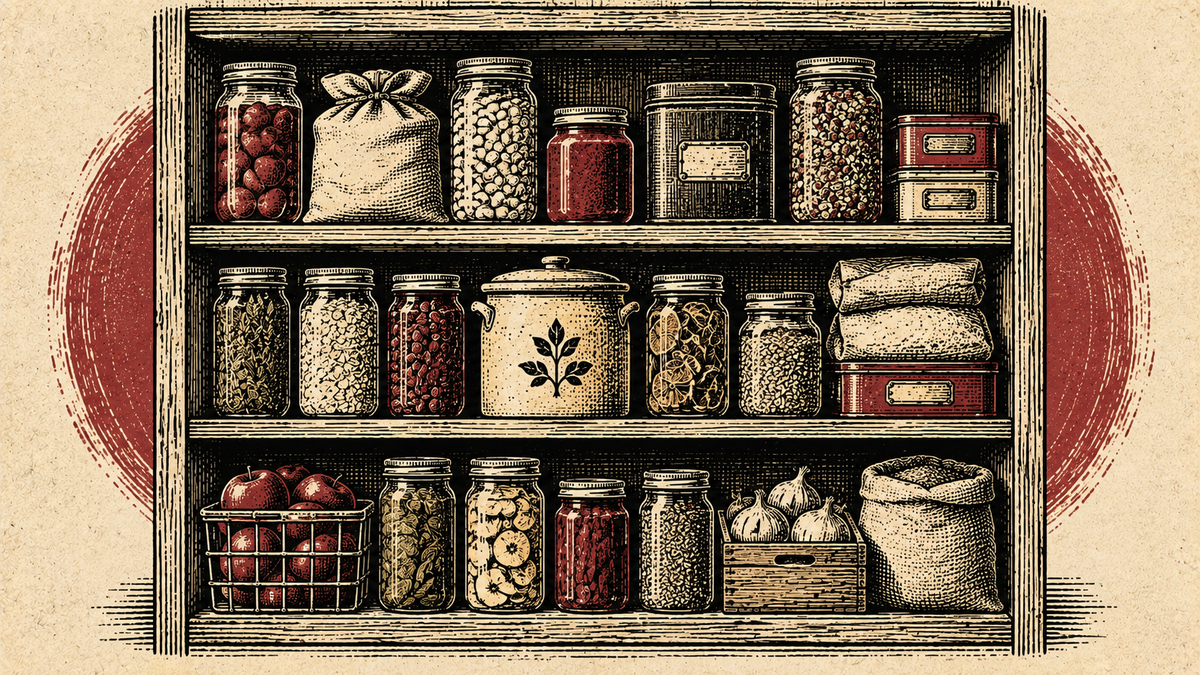
Picture a kitchen pantry that is stuffed. Floor to ceiling, every shelf packed, no room for one more thing. What does the person do who has this full pantry? Drive to the store to get something for dinner, of course!
That is family history for most of us, and it has a name. The Full Pantry Problem is the gap between having enough and believing you have enough, and it hits the family historians who have done the most research hardest of all.
What a full pantry is
A full pantry is the state of having a lot of records on an ancestor and still going out to collect more before writing starts.
Chronicle writing does not require more records. Chronicle writing asks the writer to focus on what this story needs, which is a much smaller question and the only one that can actually be answered.
But we live in a culture of abundance. Every genealogy record site sells the same figure — millions of records, millions more added each year, a pile for us to search that never stops growing. In reality for most ancestors, what actually exists on one individual is somewhere between five and twenty records with their name on it.
The grocery store has thousands items. Your recipe needs eight.
Why having enough does not feel like having enough
When it comes to genealogy research, the store is always open. The store has millions of items. And walking the aisles of it feels like cooking.
Searching websites produces evidence of effort — a new record saved, a hint clicked, a database lit up with something you did not have. It feels like work because it is work. It is just not the work that produces a story. I walked through this whole trap on camera in my video I originally called The Problem With Free Records.
I did this myself for years. My idea of doing family history was finding more, and every record I saved felt like progress. Then one day I counted the records I had on my great great grandfather, Horace. Twenty-nine records on the man (hooray for newspapers who captured a few stories of his life), and I had written exactly zero words about him.
This is not a character flaw and I am not standing anywhere judging anybody. I had Full Pantry problem badly. I believe the need to keep searching is a trained habit, and we came by it honestly. Everything that ever taught us how to do this taught us to search. Find the record, find the next record, hidden features for finding more. Where to look, what to type, which database holds the thing you do not have yet.
Nobody ever sat us down and said: stop. You have enough. You can do something with it.
Why abundance is harder than scarcity
There is a second thing going on here, and it is a second trap that gets us.
When the research collected is thin, such as a few census records and a gravestone, the next move is obvious. Go find more. When the folder is full with dozens of records, the next move requires a decision. What do I want this chronicle to be about? Every answer leaves things out, and deciding what matters most feels like a loss in a way that finding one more record never does.
So what most people do when unsure what to write about is to reorganize the files. Reread records already read. Open a new research question. Confirm it with DNA work. No one faults a family historian for being thorough.
The Full Pantry gets re-organized, maybe some new shelving and organizers, so it can hold more.
The cure is a scope statement
Scope is the first part of the STORI process and names what this chronicle covers.
How Anna Miller kept the farm running after 1918 is a scope. It sets aside the twenty other stories in the folder without deleting any of them, and they are all still there when this chronicle is done.
Once the angle is named, "do I have enough" stops being a feeling and becomes a question with an answer. You can look at your pantry and see whether it has what it needs. Usually it has it and all you need is one to two specific items.
Where the Pantry Check sits
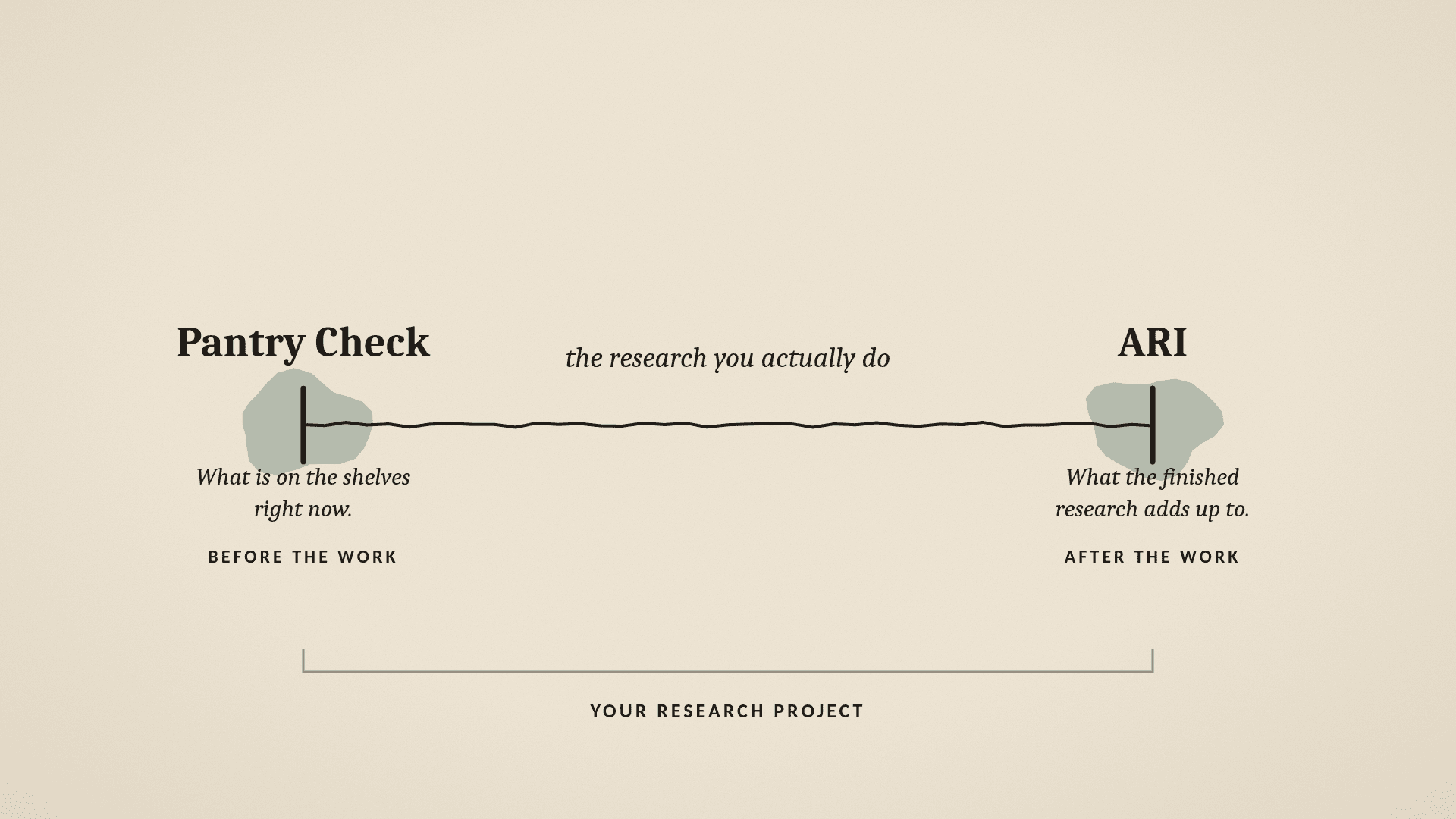
The Pantry Check and the final report are bookends on the same project. The Check runs at the start of the research project and describes what you already hold. The Ancestor Research Inventory runs at the end and describes what the finished research adds up to. The research you do to finish for an ancestor happens in between them.
Each answers a different question from the other Chronicle Makers standards. The Soundness Standard governs when the research on an ancestor is done, and the Research Quality Check runs that question against one ancestor at one moment.
The Pantry Check runs inside the Chronicle Makers Toolkit in Skool.
What to do with your Full Pantry
If you recognized yourself above, the useful next move is not another record.
Write the scope statement. One sentence naming the angle this chronicle covers. Then look at your shelves against that sentence rather than against everything that could theoretically exist about this person.
For most people who read this far, the answer changes. The pantry has been full for a while.