AI Can't Give You the Answer (That Was Never the Point)
AI can't hand you the answer about your ancestor, and that was never the point. How the Full Pantry changes what AI does for genealogy.

There is a moment when many family historians quit AI, and it is always the same moment.
They ask about an ancestor they are stuck on. The AI gives a thoughtful, hedged reply full of possibilities and maybes. And they close the tab thinking, well, what is the point of using AI if it can't give me the answer?
I want to catch you at that moment, because the frustration is real and the conclusion is wrong. The AI was never going to give you the answer. Nothing was. Understanding why is the single most useful thing you can learn about this technology, and it comes down to what I call the Full Pantry.
There is no answer machine
Start with the assumption hiding under the frustration. It goes something like this: the AI has read the whole internet, so somewhere inside the AI must sit two things: the correct family tree of all human history, every person, every record attached; and a complete database of all the records that have ever existed, and my ancestor is in there if I ask the right way.
No such tree exists. There is no master database of records. Not inside the AI, not anywhere.
What the AI absorbed in training is what people have written. That includes real history and real law, and it also includes millions of public family trees and blogs built by hints, copied from other hint-built trees, resting on limited records. The errors in those trees were copied forward so many times they wear the costume of consensus, and consensus = authority. So when an AI sounds confident about your specific ancestor without seeing your records, it is not consulting anything before answering. It is echoing the crowd, and the crowd could be wrong.
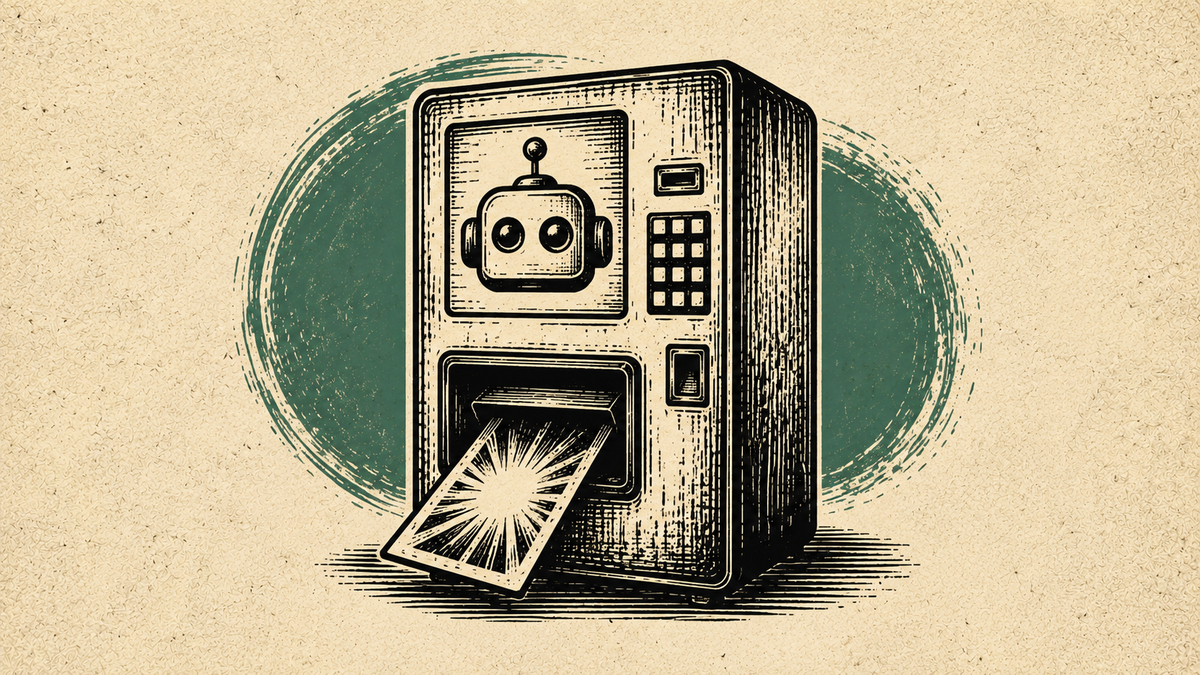
An AI is not a vending machine where you punch in a name and a finished answer drops out. Treat it like one and you will get a stale Snickers bar.
The Full Pantry
Here is what an AI actually is. It is a skilled cook who walks into your kitchen.
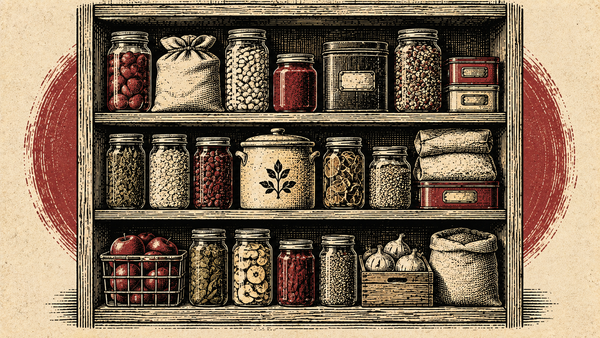
That cook can only work with two things. Your pantry (meaning the records, transcriptions, and notes you actually put in front of it), and the shelf of staple seasonings it arrived with (for example: general historical and legal context, what a quitclaim deed is, how the 1850 census worked, what militia service meant in Pennsylvania).
The cook does not know what is in your basement freezer. It has not seen the deed you never uploaded or the family Bible in your cousin's attic. And it will not drive to the store unless you send it. You, the operator of the AI tool, have to know that more ingredients exist and ask for them to be fetched or go get them yourself.
If the pantry is thin, no cook alive can make the dish. The quality of everything the AI produces for you is set by what you stocked. That is the Full Pantry principle, and it is why two people can use the same AI on the same ancestor and get results that are worlds apart. The difference was never the model. It was what the AI was given to cook with.
Genealogy was never fill-in-the-blank
Now the part that changes how you work.
Even with a full pantry, the cook does not decide the menu. You do. Because genealogy has never been a fill-in-the-blank subject. It is not true or false. The real shape of every genealogical question is this: here are all the possibilities the records allow, now pick one and give your reasons.
That is not a limitation of AI. That is the discipline of genealogy itself, and it was the discipline long before computers. A conclusion in genealogy is a judgment with reasoning attached. Nobody can hand it to you, because a judgment you did not make is not yours, and reasoning you cannot produce is not reasoning.
What AI changes is the speed of everything before the judgment. It lays every possibility on the counter faster than you ever could alone. It transcribes the will, builds the timeline, surfaces the conflict between the census and the tax list, drafts the case for and against each candidate. Work that once took a winter now takes an afternoon. Then it stops, exactly where it should, and the last step is yours. Pick. Give your reasons. Write them down.
The people who quit at the no-answers moment wanted the machine to do the one step that cannot be delegated. The people who thrive with AI let it do every step except that one.
What this looks like in practice
Stocking the pantry well and judging what the cook produces are learnable skills, and they are the same skills at any speed. Every key fact traces to an original record you examined. Every possibility gets weighed at honest confidence. That standard has a name and five checks: the Research Quality Check.
How you ask matters too, because the operator who knows to prompt for more context, more sources, and more possibilities gets a different class of result: How AI Can Help Organize Genealogy Research shows the pantry-stocking side, and the tool walkthroughs (Claude, ChatGPT, Gemini) show how to set up a kitchen worth cooking in.
And if you were about to close the tab at the no-answers moment, stay. The reasoning you were hoping to skip is the part your grandchildren will actually inherit. Inside the Chronicle Makers community, we practice it together, on real ancestors, until picking and giving your reasons feels less like an exam and more like cooking in a kitchen you finally stocked. The first dish is closer than you think: the Chronicle Writing Sprint.